

Campus Transition 2026-2031
VSTC Campus Transition
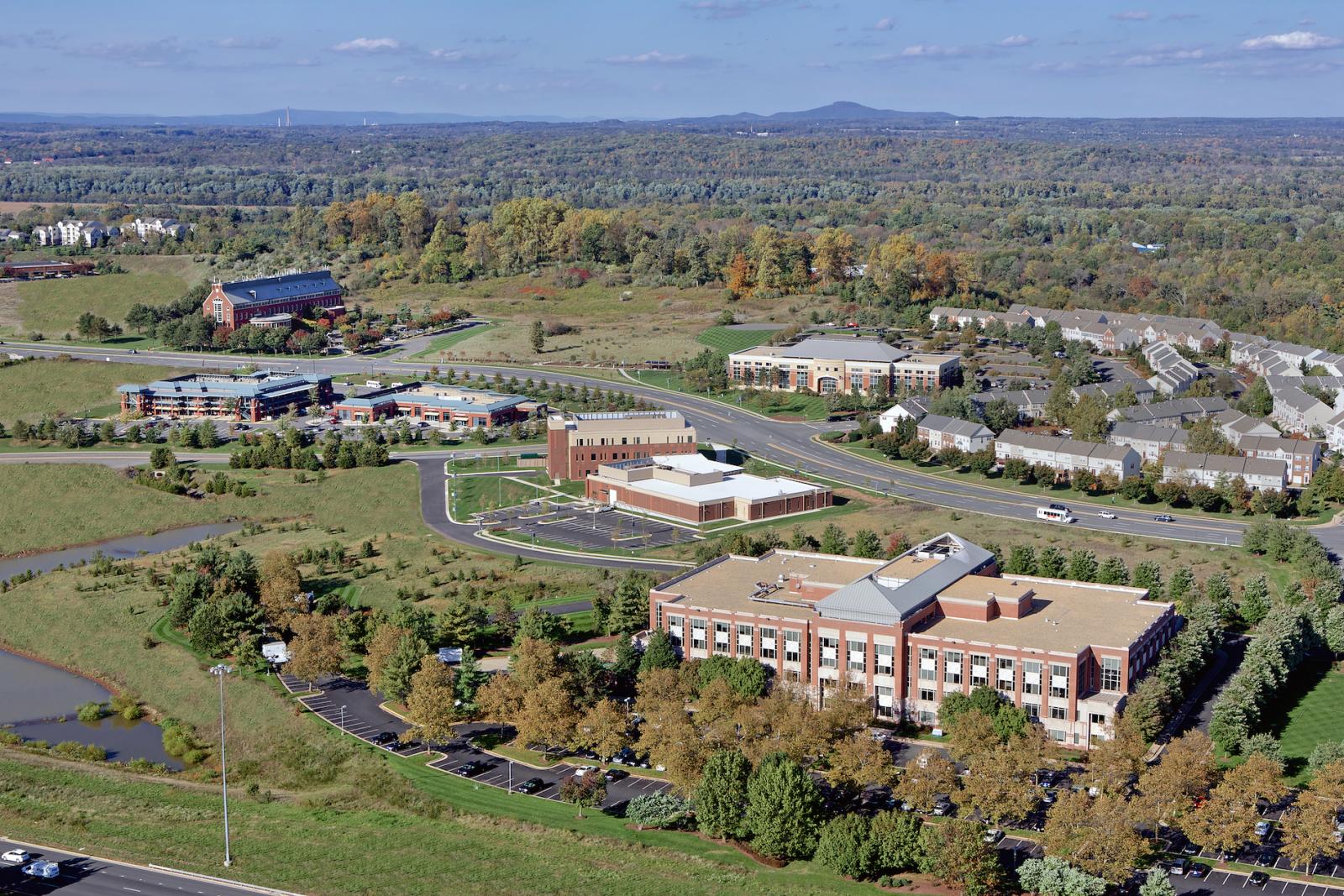
In February 2026, George Washington University announced plans to close the Virginia Science and Technology Campus by February 2031 and transition its programs and departments to new or existing university spaces. GW has developed a Five-Year Roadmap to guide the transition and provide a framework for the planning ahead.
Latest Update | November 2026
VSTC Five-Year Roadmap Released
The roadmap provides a high-level framework for transitioning programs and departments from VSTC through February 2031. It outlines anticipated timing, future space needs, key milestones and considerations that will guide the next phase of planning.
The roadmap provides direction while recognizing that every program and department has different needs. It is a guide for continued planning, not a final decision on every future location, detailed move schedule, or related university policy.

VSTC Community Survey
This survey asks for your input to help the VSTC transition planning team understand your experience, what matters most to you, and how a future location and space could best support you.
40+
Stakeholder interviews
~90
Focus group participants
300+
Town hall attendees
Why GW is Making this Transition / Looking Ahead
| Integrated GW Identity | Academic Collaboration | Program Enhancement | Administrative Efficiency | Long-Term Financial Health |
|---|---|---|---|---|
| Strengthen connections to the broader GW community and campus resources. | Increase opportunities for collaboration among programs, schools, departments and research. | Create opportunities for programs currently at VSTC to grow. | Consider how administrative functions can be located to support effective service delivery. | Leverage proceeds from the VSTC sale to support university priorities. |
What the Roadmap Means / A Framework for the Transition
| What the Roadmap Provides | What Remains to Be Determined |
|---|---|
|
|
The roadmap establishes a path forward while detailed planning and decisions continue.
Relocation Committees & Campus Engagement
Development of the roadmap was supported by two cross-functional committees working alongside GW leadership, program and department leaders, and the project team.
| Core Committee | Relocation Coordinating Committee |
|---|---|
Provided ongoing guidance throughout the initiative, input on key decisions and validation of emerging findings. | Served as a cross-functional advisory body, providing input on key decisions, validating emerging findings and serving as ambassadors within their respective groups. |
Transition Process
One Transition. Individualized Plans.
Programs and departments have different academic, operational, space and organizational needs, so transition schedules and milestones will vary within the broader framework.
What's Next / From Roadmap to Implementation
- Individual Transition Planning: Develop program- and department-specific plans.
- Future Locations: Evaluate potential locations based on programmatic, operational and strategic needs.
- Detailed Space Planning: Further define space requirements as projects advance.
- Ongoing Engagement & Support: Continue communication and stakeholder engagement throughout implementation.
- February 2026:
- GW completes sale of VSTC with 5-year leaseback agreement
- 2026:
- Town Hall #1
- Committees formed
- Consultants engaged
- Initial stakeholder interviews
- Town Hall #2
- Ongoing stakeholder interviews
- 5-year road map development
- Roadmap released
- Town Hall #3
- VSTC Staff, Faculty, and Survey to launch
- Continued partnership with VSTC department & program leadership to develop individualized plans for each program and department based on the roadmap information and framework
- 2027:
- Finalize and share VSTC department and program individualized plans
- Conduct a new administrative workplace model at Enterprise Hall
- Continued stakeholder engagement and change management activities
- 2028:
- Any relocations from VSTC will not take place before Summer 2028
- 2029:
- Expected activities/details in 2029 (if applicable)
- 2031:
- VSTC to close.
*Italics indicate activities that have been completed or are currently in process.
Frequently Asked Questions
- Why did GW decide to sell VSTC?
VSTC has been an important part of GW’s history, and we are grateful for the students, faculty and staff who study, teach, conduct research and work at the campus. The impact the campus has had on our university is a direct reflection of their scholarship, teaching, service and leadership.
When considering the sale, we had to take seriously the opportunity to capitalize on the region's rapidly rising land prices and the impact a sale would have on the future of our university. Ultimately, after careful deliberation, the Board of Trustees and university leadership decided to seize that opportunity. The campus was purchased by Amazon Data Services for over $400 million.
This sale represents a significant investment in our community and in our broader efforts to ensure long-term financial health and to invest more deeply in our academic mission.
- What does this mean for the VSTC community?
We are committed to the students, faculty and staff, and to the research, academic and administrative programs based there.
This agreement gives GW the opportunity to continue operating programs at VSTC for up to five years. This was a critical component of the sale negotiation, as it gives us time to work together to plan deliberately, thoughtfully and responsibly.
- Will staff and faculty at VSTC be asked to move to Foggy Bottom?
Although we do not yet have finalized relocation plans for the people, programs and activities currently at VSTC, we acknowledge the real possibility that some programs will relocate to Foggy Bottom. We know that this creates uncertainty for people, and we will do our best to minimize the impact this transition might cause for our colleagues.
However, we also see this as a great opportunity to think creatively about various aspects of the campus and the faculty and staff who work there, and we look forward to including faculty and staff in this process and hearing ideas. Our foremost priority during this transition is to support the people of the VSTC community and the programs they enable and lead.
- Will students be able to complete their courses of study and degree programs at VSTC?
Students will be able to complete their courses of study and their degree programs. We are committed to our students and the future of the academic programs currently housed at VSTC. The sale of VSTC provides many opportunities to strengthen and support the School of Nursing.
- What does this mean for current and future GW students considering programs currently at VSTC?
The university's commitment to our students and to the academic programs they choose at GW remains the same. There will be no changes to the academic programming available as a result of the VSTC transition at this time. That said, this moment gives us the opportunity to thoughtfully strengthen and evolve how we support and deliver these programs in ways that benefit current and future students and the programs themselves.
- How will the proceeds from the sale be used?
Prior to closing, the GW Board of Trustees passed a resolution directing that a significant portion of the proceeds be used to establish a new endowment aligned with GW’s strategic framework, Raising Higher: OneGW’s Path to Preeminence.
Income generated from this endowment will support strategic investments in research and teaching and increase resources available for student financial aid.
Additionally, the board resolution included a proposal from the administration that provided a one-time bonus payment to eligible GW faculty and staff.
- Does this sale resolve GW’s structural deficit?
While the sale of VSTC strengthens our overall financial position, it does not resolve the underlying causes of the structural deficit. The Foundational Excellence Initiative is designed to address issues that contributed to the structural deficit and to identify new opportunities to grow revenue and improve operations.
- What does this mean for GW’s future?
The sale of VSTC marks a pivotal moment for GW. It provides significant financial flexibility and supports long-term strategic investments, while reinforcing the university’s commitment to aligning its resources with its academic priorities.
Through this transition, GW remains focused on building a strong foundation for future generations and positioning the university to thrive for decades to come.
- How can I be part of the decision-making process over the next five years?
Students, faculty and staff will be included in the transition planning, and we are committed to a smooth, well-planned process that ensures continuity of VSTC programs and services, and supports our colleagues through this transition. We will continue to provide information to the community through emails and updates on this site.
- Who developed the Roadmap and how was it informed?
The roadmap was developed with the department leaders of the 15 programs and departments presently located at VSTC. Understanding the importance of a stakeholder-centered and data-driven process, GW partnered with Brailsford & Dunlavey (B&D) and Perkins & Will to develop the Roadmap in partnership with VSTC leadership.
There was extensive engagement with VSTC staff, faculty, students, university leadership, and operational partners. The engagement included department interviews, focus groups, campus tours, a town hall, on-campus anonymous feedback boxes, and other opportunities to share feedback. This input was essential for the team to understand current and future needs and develop recommendations to guide the transition.
- Does the Roadmap determine where every VSTC program or department will move and when?
No. The Roadmap provides a framework to guide future decisions but does not identify a final location for every program or department. Potential locations will continue to be evaluated based on the needs and priorities of each group that are articulated as future location criteria which is included in the roadmap program by program.
- Will every program and department receive the same amount and type of space it has today?
Not necessarily. Future planning may involve relocating, right-sizing, consolidating, sharing, or reimagining space based on each program or department’s needs, and not every space or function currently at VSTC will require a one-for-one replacement. Every program and/or department need was determined by the leadership of each respective program.
- What factors will GW consider when determining future locations?
GW will consider each program’s mission, strategic priorities, operational and space needs, opportunities for collaboration, and the experience of students, faculty, and staff. These considerations will help guide future planning and location decisions.
- Will all VSTC departments be moving at once?
No. The transition will occur in phases based on the unique needs, dependencies, and timelines of each program and department. Individual transition plans will be developed as planning progresses, with continued communication and engagement along the way.
- What happens now that the Roadmap has been released?
GW is using the Roadmap to guide more detailed planning with individual programs and departments and inform future decisions about locations, space, and transition needs. Communication and stakeholder engagement will continue as plans are developed and refined.
Relocation Core Committee
Jennifer Abbruzzese
Associate Vice Provost for Administration and Operations
Adam Aaronson
Associate Vice President, Campus Development
Carleton Bennett
Director of Facilities, Buildings and Grounds
Baxter Goodly
Vice President, Safety and Operations
Nick Gingue
Associate Vice President, Campus Operations
Gina Lohr
Senior Associate Vice Provost for Research, Administrative Dean for the Virginia Science and Technology Campus
Sabrina Minor
Vice President and Chief People Officer
Michelle Stone
Associate Vice President, Communications
Relocation Coordinating Committee
Diane Conners
Kevin Days
Evangeline Downie
Brian Ensor
Marcia Firmani
Maurice Goode
Annie Hess
Margaret Holland
Lauren Holt
Susan Kelly-Weeder
Mimi Lima
Jennifer López
Judy Mancuso
Hellen Olumilua
Whitney Shanley
Mary Ellen Solomon
Sharon Testor
Joe Velez
Tania Wadhawan
Jennifer Wesson
Susan Wolf
Surafel Yilma
Program & Department Leaders
Office of Student Financial Assistance (OSFA)
Jay Goff, Vice President, Enrollment
Sharon Testor, Director, Admin & Operations
Michelle Arcieri, Executive Director
Registrar
Katie Cloud, University Registrar
Finance
Hemant Bakshi, Vice President, Finance
Donna Ginter, Associate Vice President, Supply Chain
Neena Ali, Associate Vice President, Controller
Human Resources (HR)
Sabrina Minor, Vice President & Chief People Officer
Diane Conners, Executive Director, Talent Acquisition
GW Information Technology (GWIT)
Anna Vakulick, Interim Vice Provost
Brian Ensor, Associate Vice President, Cybersecurity, Infrastructure, & Research Services
Ronald Layne, Associate Vice President, Business Intelligence & Data Management
Jared Johnson, Associate Vice President, Academic Technology & Customer Experience
Nicole Brindley, Executive Special Assistant to the Interim Vice Provost of IT
Facilities
Deborah Ewell, Facility Manager
Raymond Wallace Jr., HVAC Supervisor
College of Professional Studies (CPS)
Liesl Riddle, Dean
Graduate School of Education and Human Development (GSEHD)
Lionel Howard, Interim Dean
Meg Holland, Associate Dean
Mary Ellen Solomon, Associate Program Director
School of Engineering and Applied Science (SEAS)
John Lach, Dean
Jason Zara, Interim Dean
Joe Velez, Director, Admin & Operations
Columbian College of Arts & Sciences (CCAS) Physics
Paul Wahlbeck, Dean
Alexander J. van der Horst, Professor of Physics & Department Chair
John T. Lill, Associate Dean for Research
Columbian College of Arts & Sciences (CCAS) Theater
Kimberly Gross, Vice Dean for Programs & Operations
Laura Schiavo, Director, Corcoran; Associate Professor, Museum Studies
Natasha Bailey, Director, Operations
Columbian College of Arts & Sciences (CCAS) Theater
Kimberly Gross, Vice Dean for Programs & Operations
Laura Schiavo, Director, Corcoran; Associate Professor, Museum Studies
Natasha Bailey, Director, Operations
School of Medicine and Health Sciences (SMHS)
Hellen Olumilua, Director, Admin & Operations
Marcia Firmani, Chair, Biomedical Sciences
School of Nursing (SON)
Susan Kelly-Weeder, Dean
Surafel Yilma, Director, Operations & Special Projects
Cameron Hogg, Associate Dean
Linda Cassar, Interim Associate Dean
Chelsea Durbin, Assistant Dean, Student Enrollment & Success
Christine Thomas, Director, Simulation &
Experiential Learning
Avenir Foundation Conservation and Collections Resource Center (AFCCRC)
Maria Fusco, Chief Conservator
Lauren Holt, Museum Registrar
Libraries
Tara Patterson, Library Manager II
Jennifer Wesson, Associate Dean
Additional Stakeholders
Kevin Michael Days, Executive Director of Government and Community Relations
Geneva Henry, Dean of Libraries and Academic Innovation, Vice Provost for Libraries and Information Technology
Tacy Lambiase, Director, Office of Sustainability
Kathleen McDonald, Associate Vice President, Campus Safety
Michael Raad, Energy Manager
Mansi Talwar, Assistant Vice President, Energy, Engineering, and Sustainability
Elizabeth Waraksa, Associate Dean at George Washington University Libraries and Academic Innovation
Charlie Wurz, Director, Transportation & Logistics
Latest Updates

GW Leaders Discuss Sale of Virginia Science and Technology Campus
March 4, 2026
GW Leaders Discuss Sale of Virginia Science and Technology Campus
Announcing the Sale of GW’s Virginia Science and Technology Campus
February 27, 2026
Announcing the Sale of GW’s Virginia Science and Technology Campus
GW Will Do Extensive Outreach as Work Begins on a New Campus Plan
September 15, 2025
As the university’s 2007 plan sunsets in 2027, the new plan will guide the next 20 years.
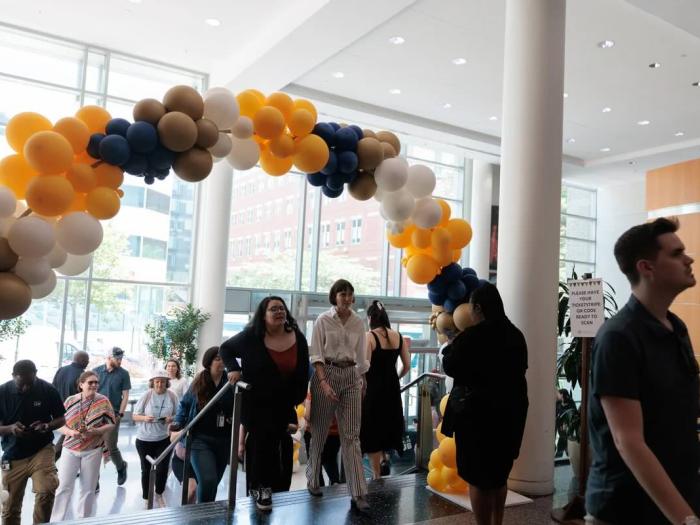
In Photos: 2025 GW Faculty and Staff Festival
June 9, 2025
Faculty and staff gathered last week on the VSTC and Foggy Bottom campus for exciting activities, raffles and a variety of tasty offerings from food trucks.